How can robotics make medical radiation testing safer, faster, and more repeatable?
WHAT
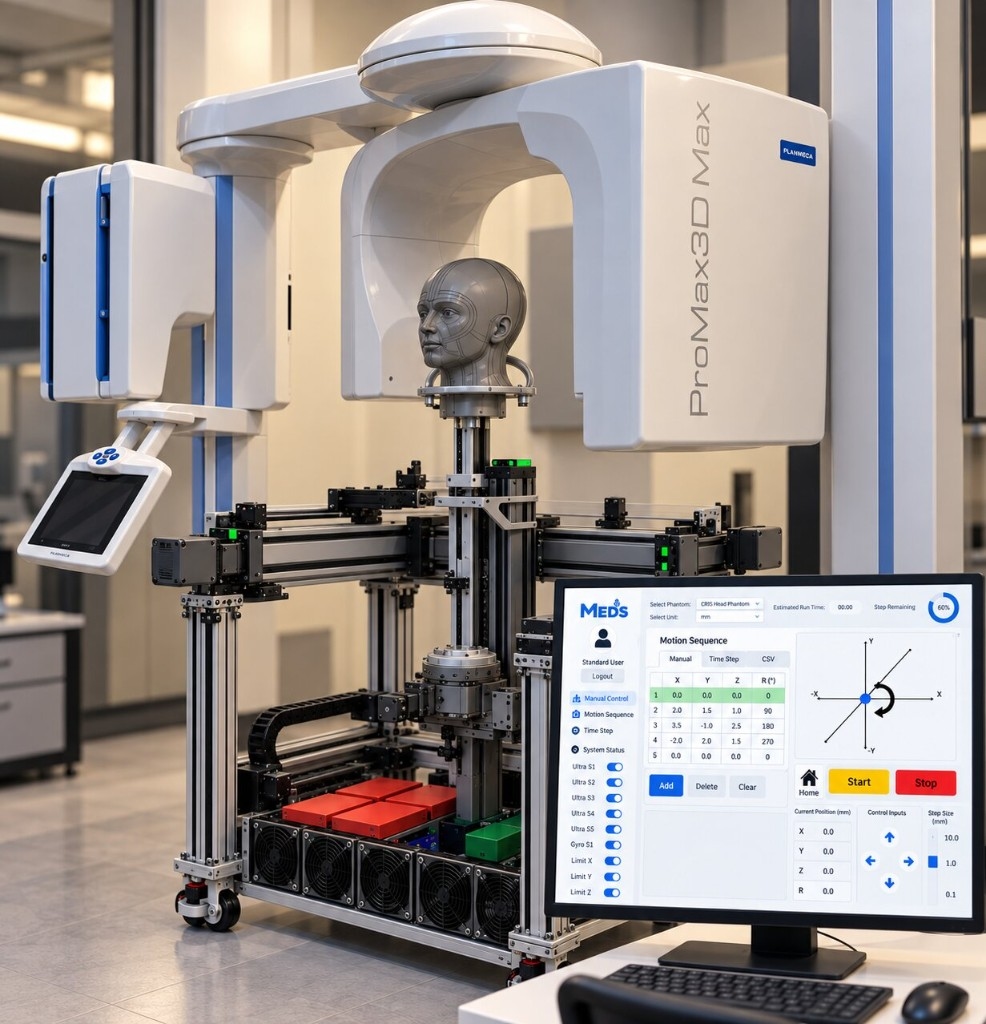
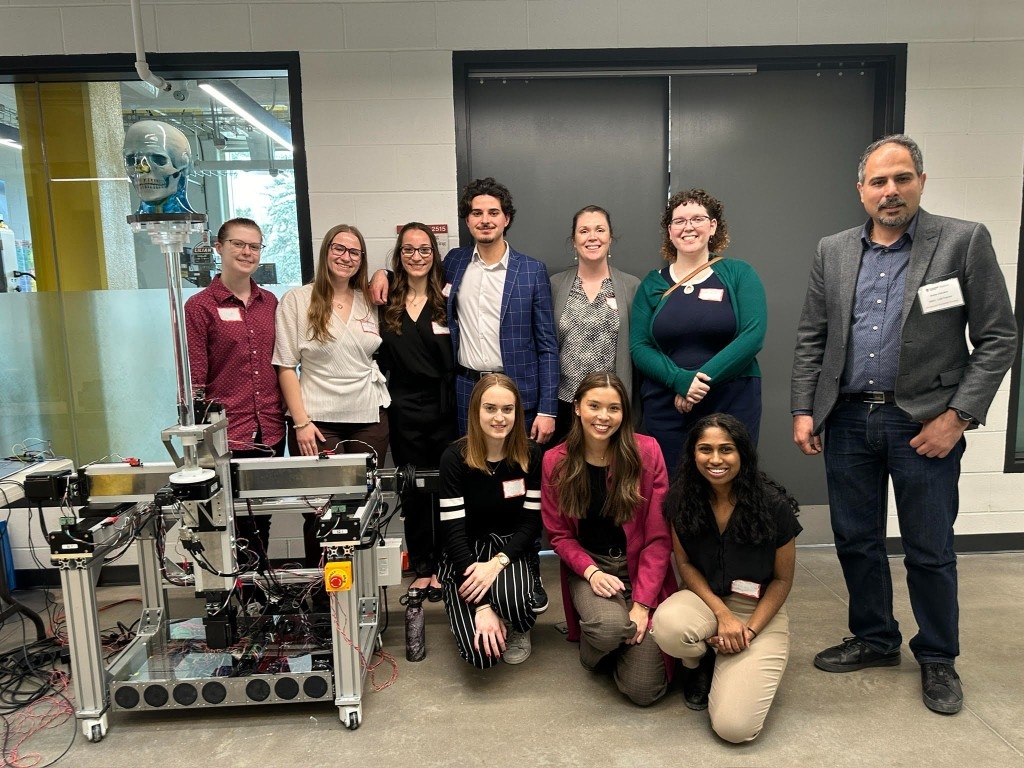
In partnership with Health Canada, our team developed MEDS - the Mechatronic Dosimetry System, a 4-axis robotic gantry that automatically positions human-equivalent test phantoms during medical imaging experiments. The system moves and rotates the phantom with precise, computer-controlled motion, reducing the need for manual positioning.
WHY
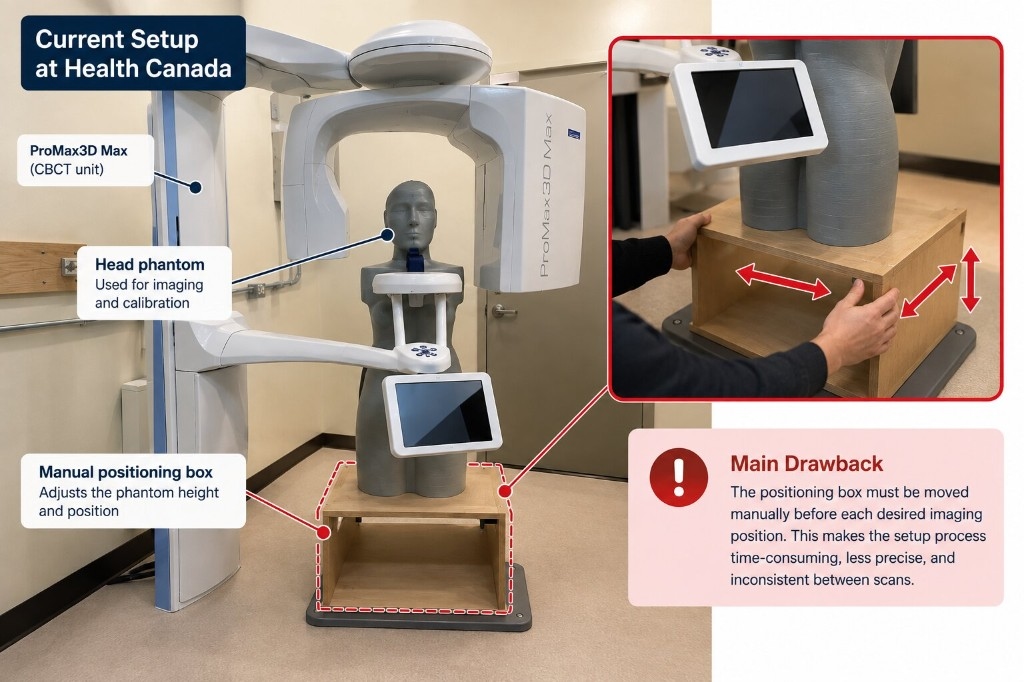
Health Canada uses tissue-equivalent phantoms to study how radiation from medical imaging devices affects the human body. Manually positioning these phantoms inside CT and X-ray equipment is cumbersome and can introduce positioning errors that affect experimental data.
MEDS was designed to make this process safer, more accurate, and repeatable - giving researchers better control over phantom positioning while reducing manual intervention.
MY IMPACT
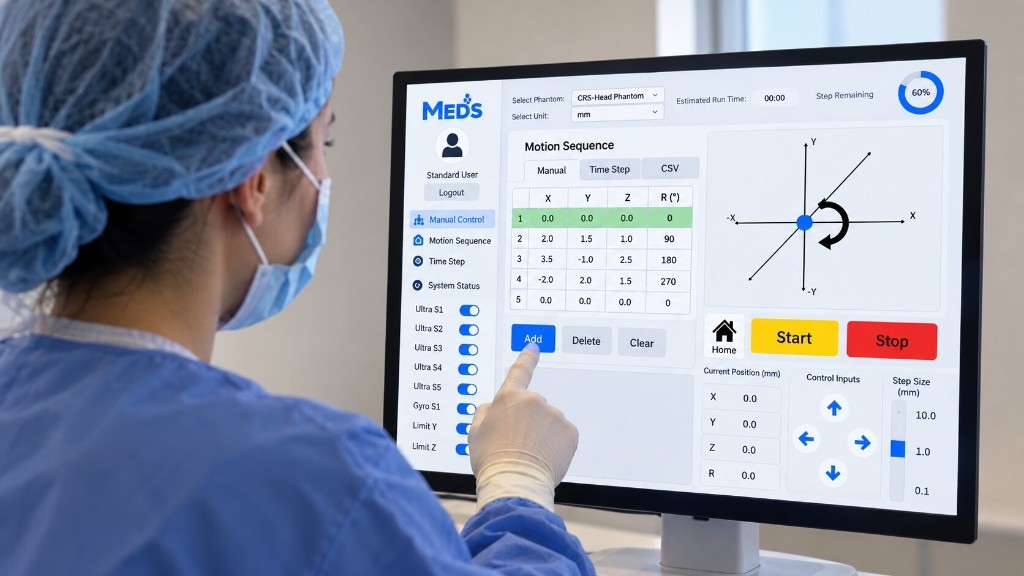
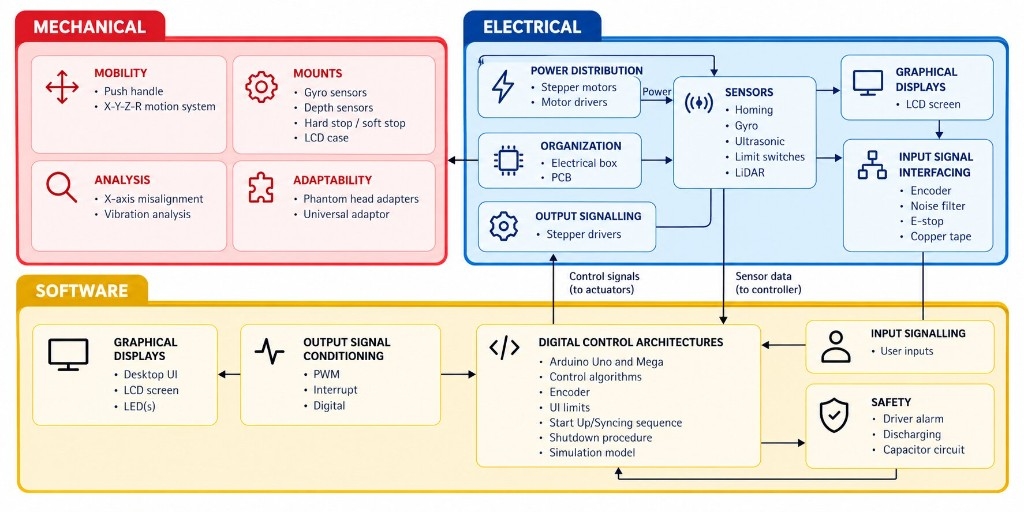
As Team Lead, I coordinated a nine-person team to turn an existing prototype into an operational 4-axis robotic positioning system for Health Canada, integrating mechanical, electrical, sensing, and software improvements. I also led the UX/UI design, creating an intuitive interface for real-time control, calibration, monitoring, and troubleshooting.