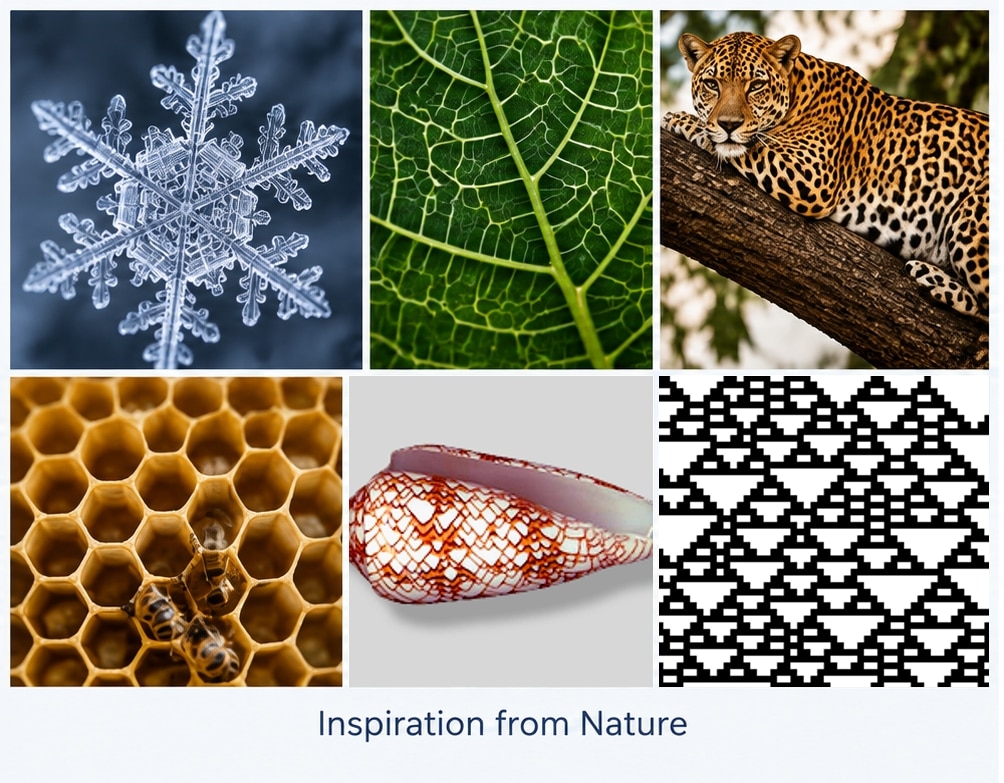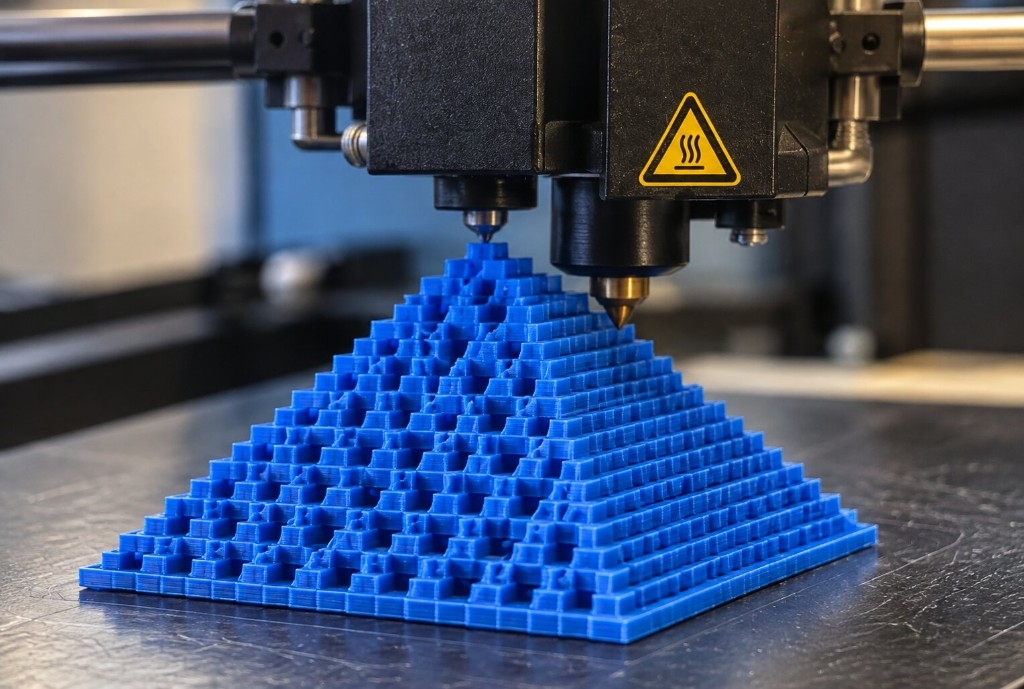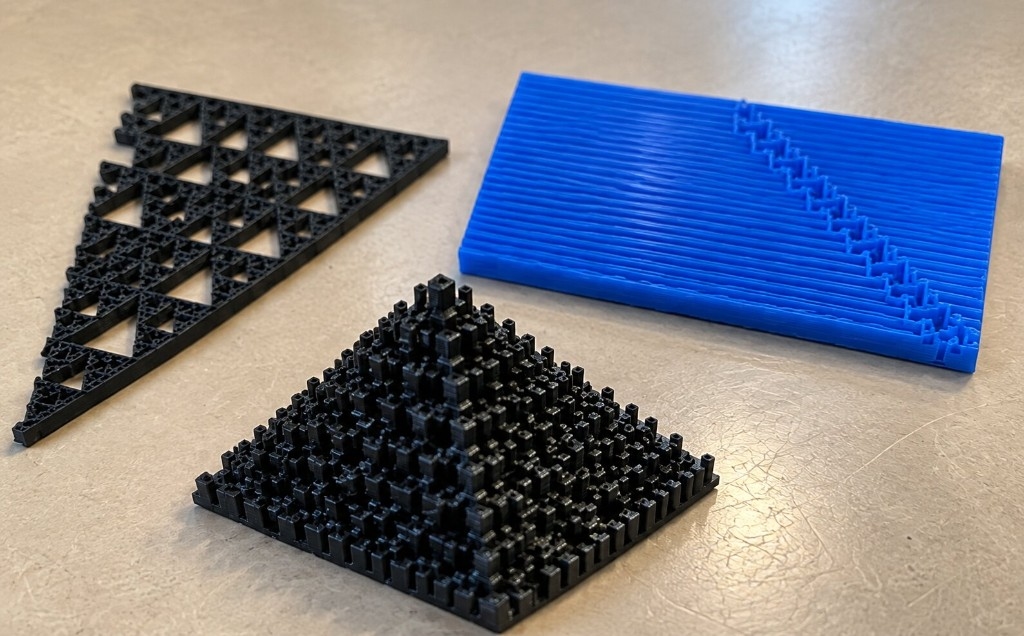
Can a structure be generated by a set of rules instead of being manually designed?
WHAT
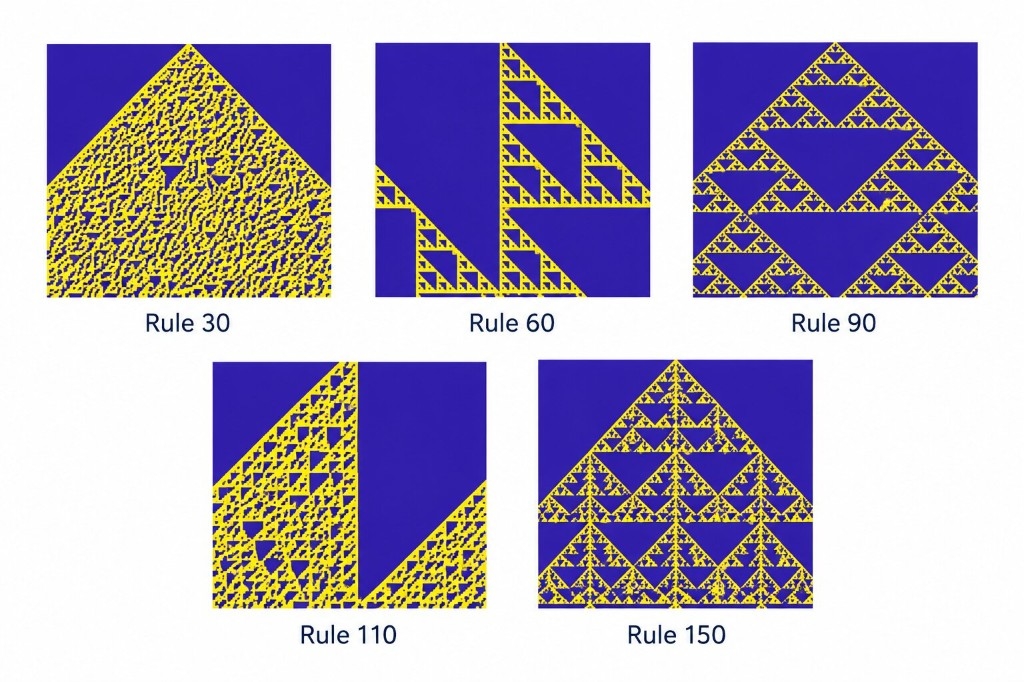
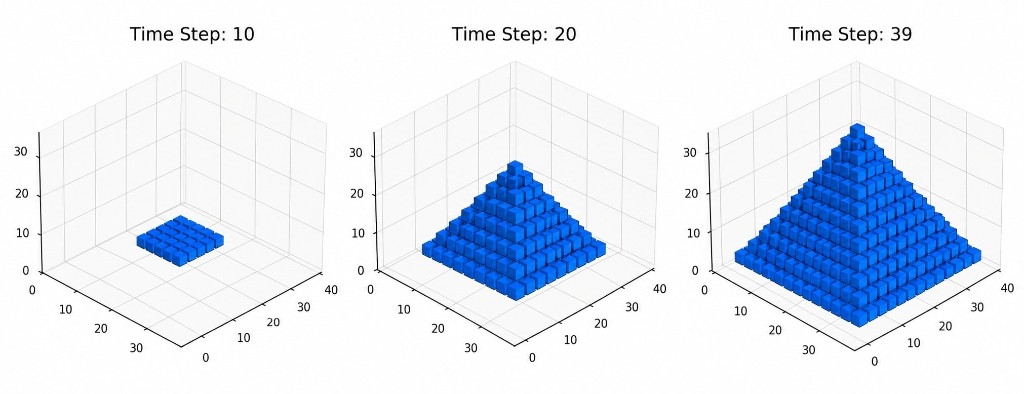
I investigated cellular automata (CA) - computational systems where individual cells change based on simple rules and the state of their neighbours - and explored how these principles could be applied to additive manufacturing. The goal was to develop algorithms capable of generating self-growing geometries that could ultimately inform adaptive, self-repairing, or highly customized 3D-printed structures.
WHY
Traditional additive manufacturing starts with a predefined 3D model that is sliced, converted into machine instructions, and then printed. This means the geometry generally needs to be determined before manufacturing begins.
Cellular automata offer a different approach, shifting the focus from designing geometry to designing rules, enabling more adaptive and resource-efficient structures.
Potential applications include tailored material properties, biomimetic materials, self-repairing systems, and tissue-engineering scaffolds.
MY IMPACT
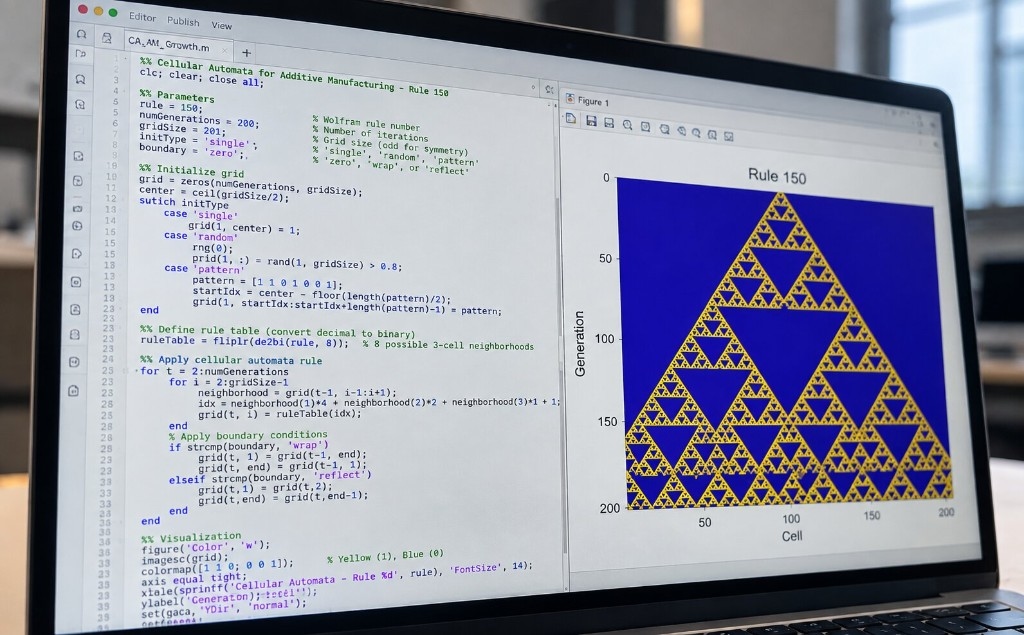
I developed cellular automata algorithms in MATLAB to generate 2D structures from different rulesets, then brought those designs to life through iterative 3D printing. After early print failures, I refined the algorithms to improve structural connectivity, successfully producing CA-generated structures.