36-HOUR DESIGN COMPETITION, 2022
Cardiac Surgical Robot Design
Can a robotic surgical system adapt to the motion of a beating heart? Can it be designed in 36 hours?
WHAT
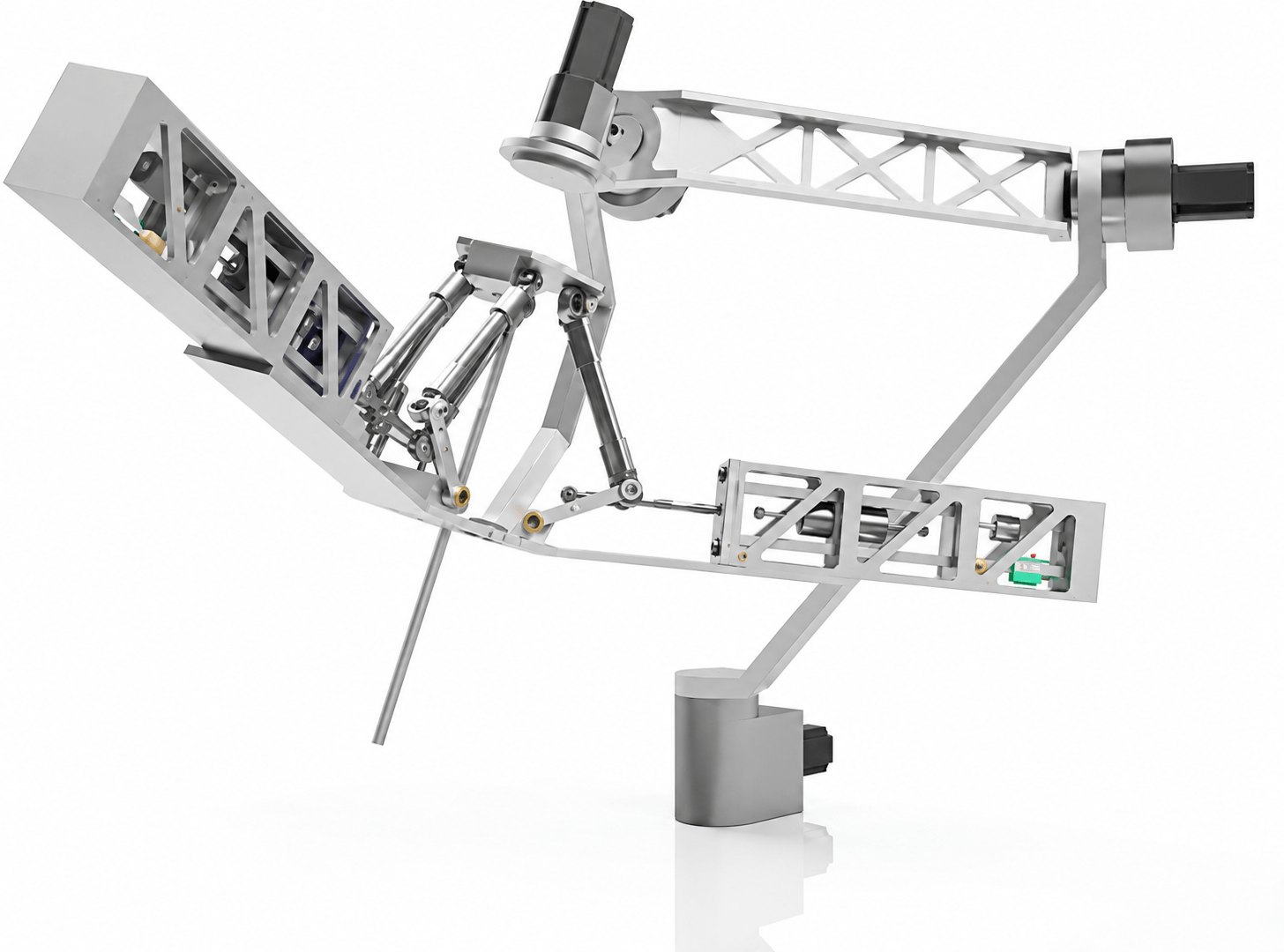
SQUiiDBot is a 3-DOF robotic surgical concept designed to support minimally invasive Coronary Artery Bypass Grafting (CABG) procedures on a beating heart.
Instead of stabilizing the heart by restricting its motion, my team's concept approached the problem from the opposite direction: design the surgical tool to move with the heart. The system tracks lateral and vertical motion while maintaining controlled contact between the surgical probe and heart surface, creating a more stable interface for the surgeon.
The challenge was to achieve that responsiveness without introducing excessive force or interfering with the heart's natural movement, and to develop the concept within 36 hours.
WHY
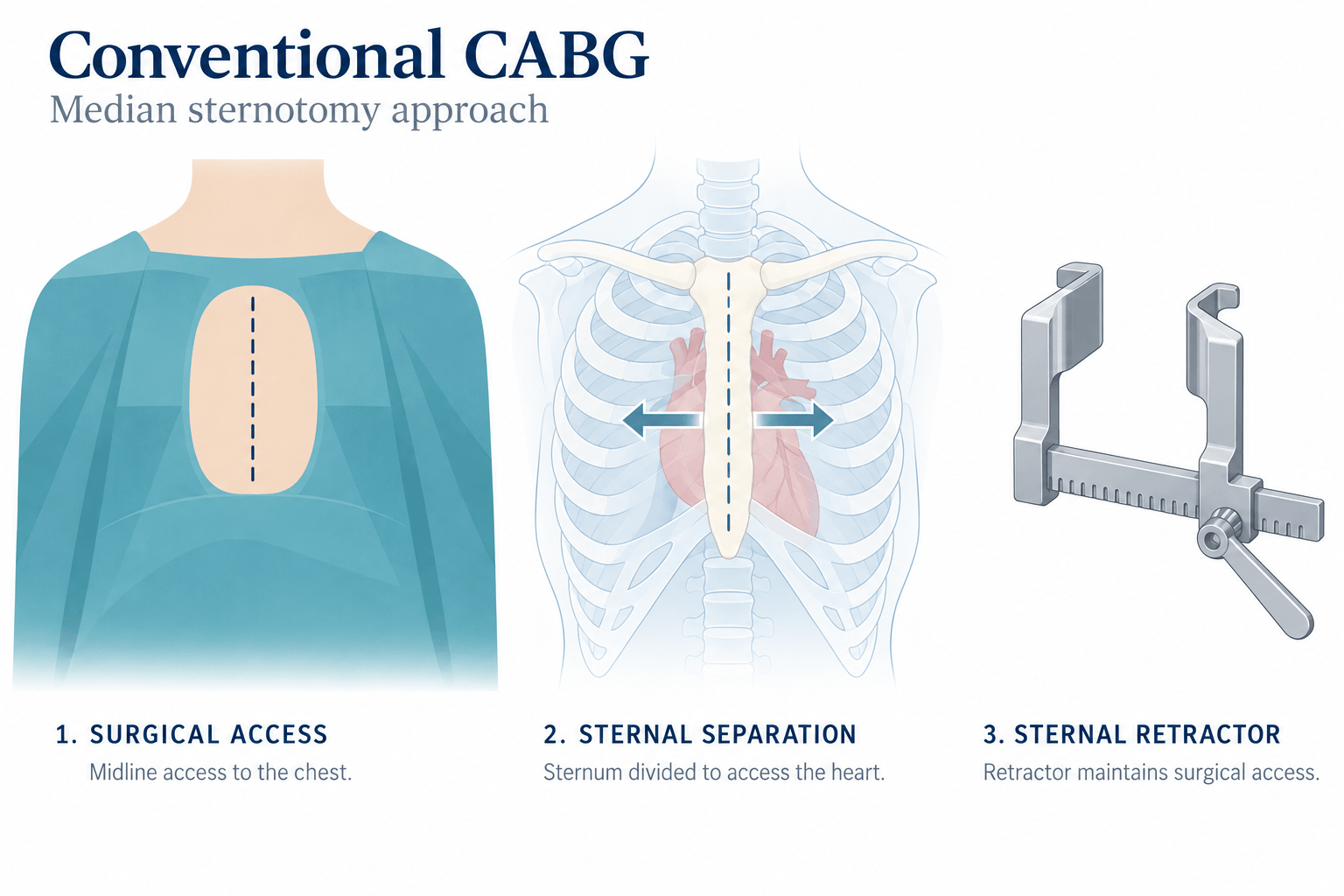
Minimally invasive CABG can reduce the surgical access required compared with traditional open heart procedures, but a smaller operating space introduces a difficult engineering problem: the surgeon must maintain precise control while working on a target that is constantly moving.
Our design therefore had to balance two needs simultaneously: provide the surgeon with a stable, responsive working interface while minimizing the forces imposed on the patient's beating heart.
HOW
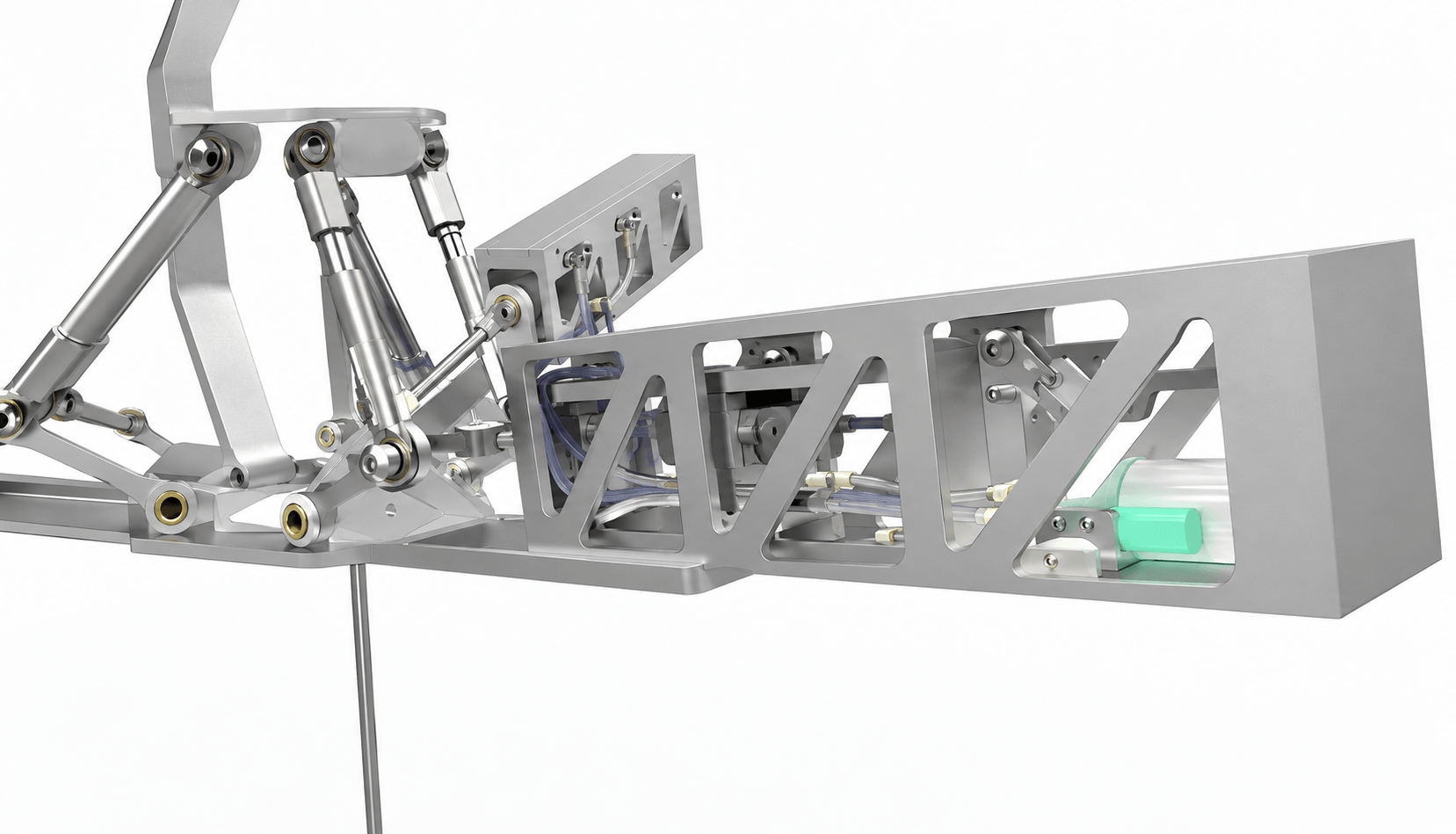
SQUiiDBot uses a closed-loop mechanical and control strategy combining spring-based force sensing, LVDT displacement measurement, voice-coil actuation, and PID control.
As the heart moves against the surgical probe, the resulting force compresses a spring within the mechanism. An LVDT measures that displacement, providing feedback that can be used to estimate changes in contact force. The PID controller interprets this feedback and commands the actuator to reposition the probe in response.
Heart moves → Spring responds → LVDT measures displacement → Controller calculates correction → Actuator moves → Probe follows
The concept extends this principle across three degrees of freedom, allowing the mechanism to respond to lateral and vertical heart motion while maintaining a controlled surgical interface.
MY IMPACT
As part of a three-person interdisciplinary team, I helped translate the surgical need into a feasible robotic concept within the 36-hour design sprint.
My work focused on the mechanical and biomedical design, including the mechanism for maintaining tool–heart contact and the spring-actuator approach used to respond to changes in force. I also evaluated how the mechanical design, sensing, and control strategy would interact as a complete system, with particular consideration for minimizing forces imposed on the heart.